
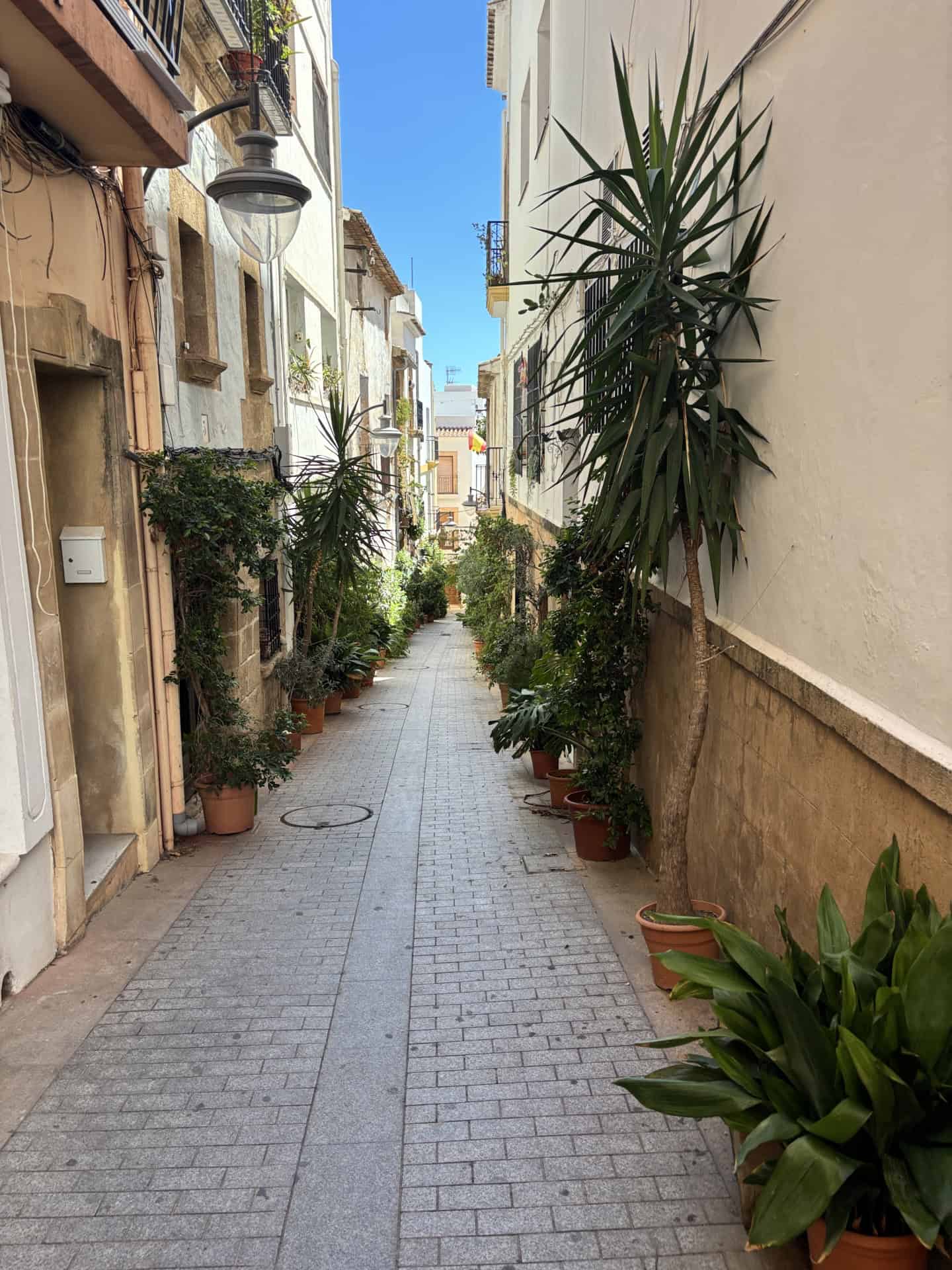
Jávea Old Town, known locally as El Pueblo, sits slightly inland from the coast and forms the administrative and commercial heart of the town. It is where most permanent residents live, work and manage daily life, and it functions independently of the beach areas.
Unlike the Arenal or the Port, the Old Town is not driven by tourism. Its rhythm is shaped by schools, markets, offices, medical services and everyday routines rather than seasonal footfall. This gives it a practical, year-round character that appeals to long-term residents.
This guide focuses on what living in the Old Town is actually like, and who it tends to suit best.
First impressions
The Old Town feels active but grounded. Streets are busy in the mornings, quieter around lunchtime, and pick up again in the early evening. Shops open early, deliveries happen throughout the day, and the area feels lived in rather than visited.
The historic centre is compact, built around narrow streets and small squares. Tosca stone buildings, shuttered windows and traditional façades give the core a recognisable character, while wider roads and apartment blocks extend outward toward the edges of the area.
Layout and character
The Old Town developed around the Iglesia de San Bartolomé and the surrounding street network. Many streets in the historic core are narrow, with limited parking and a strong pedestrian feel. Just beyond this centre, roads widen and residential apartment blocks become more common.
Housing includes traditional townhouses, apartments above shops, and more modern blocks on the edges of the Old Town. There are no gated estates or resort-style developments. Homes are integrated directly into the town, which is a key part of its appeal.
Public car parks on the edges of the historic centre help offset limited on-street parking, particularly for residents living within the oldest streets.
Day-to-day living
Living in the Old Town is about convenience and routine. Most daily needs are within walking distance, including supermarkets, local food shops, bakeries, cafés, banks, medical centres and pharmacies.
The weekly Thursday market near the Plaza de la Constitución remains one of the Old Town’s main anchors. It is used by residents for fresh produce and routine shopping rather than as a visitor attraction.
Most residents move around the Old Town on foot during the week, using a car mainly for trips to the Arenal, the Port or surrounding residential areas.
Parking and practical reality
Parking is one of the main adjustments for buyers moving into the Old Town. On-street parking within the historic core is limited, and many residents rely on nearby public car parks or short walks from where they leave the car.
For buyers accustomed to parking directly outside their home, this can feel restrictive. For those who value walkability and central services, it is usually an accepted part of living in a traditional Spanish town. Understanding this trade-off early helps avoid frustration later.
Schools and services
The Old Town is well suited to families using the Spanish education system. Primary and secondary schools are based in or close to the area, along with sports facilities, municipal buildings and cultural centres.
International schools in other parts of Jávea and nearby Benitachell are reachable by car, but daily life in the Old Town is largely self-contained and does not rely on travelling to other areas for essentials.
Noise, traffic and atmosphere
Noise levels are typical of a working town. There is traffic during peak hours, particularly on routes connecting the Old Town with the Port, the Arenal and inland residential zones.
Evenings are generally calm. Bars and restaurants close earlier than in beach areas, nightlife is limited, and the atmosphere remains steady rather than quiet. Activity follows a predictable daily pattern rather than a seasonal one.
Seasonal feel
Seasonality has less impact here than anywhere else in Jávea. Summer brings more activity during fiestas and market days, but the town does not empty out in winter. Shops, schools and services operate normally throughout the year.
This consistency is one of the main reasons long-term residents choose the Old Town over coastal zones that fluctuate more dramatically between seasons.
Property types and living style
Properties in the Old Town are chosen for practicality rather than views. Outdoor space is usually limited, and terraces and balconies tend to be smaller than in coastal or villa areas.
What buyers gain instead is proximity. Daily errands, schools and services are close by, and the town functions without reliance on tourism. For many residents, this outweighs the absence of sea views or resort-style surroundings.
Who the Old Town suits
The Old Town typically suits buyers looking for year-round Spanish town life, families using local schools, people who prioritise daily walkability, and residents who value practicality and routine over scenery.
It appeals to those who want Jávea to feel like a functioning town rather than a holiday destination.
Who the Old Town does not suit
The Old Town is less suited to buyers seeking large outdoor spaces, private gardens or uninterrupted sea views. It may also feel restrictive for those who rely heavily on a car or expect easy on-street parking outside their home.
Buyers looking for quiet, low-density living or resort-style surroundings often feel more comfortable in inland residential areas or coastal zones.
The Old Town in context
The Old Town sits between the Port and inland residential areas, with quick access to both the coast and the wider road network. It acts as the operational centre of Jávea rather than a showcase area.
For many residents, it is the part of town where everyday life actually happens.
