Spain enters 2026 with momentum still behind the housing market. 2025 closed with roughly 705,000 home sales, the highest level since 2008, and national prices rising close to 10% year on year on the Registrars’ figures. (elpais.com)
That does not mean every local market will behave the same way, but it does mean Spain is not heading into 2026 from a weak position.
Below is the national picture first, then what it may mean for coastal lifestyle markets on the Costa Blanca North.
1) Spain in 2026: demand remains strong, supply remains tight
The national numbers are still pointing upwards.
INE’s Housing Price Index for Q3 2025 showed annual growth at 12.8%, with second hand housing rising 13.4%, and a quarterly increase of 2.9%. (ine.es)
Most industry forecasts are not calling for a sudden reversal in 2026, but rather a slower continuation. BBVA Research forecast prices rising around 5.3% in 2026, with sales volumes still increasing. (bbvaresearch.com)
The consistent theme here is simple: demand has stayed resilient, and supply has not expanded enough to loosen the market meaningfully.
2) Foreign buying continues to shape coastal markets
Foreign demand remains one of the key pillars of Spain’s housing market, especially in coastal provinces.
CaixaBank Research cites foreign buyers at 14.4% of total sales in the trailing four quarters to Q2 2025, representing around 100,000 transactions. (caixabankresearch.com)
Coastal towns sit firmly within that lifestyle driven segment. Even when broader sentiment softens, demand in prime coastal towns tends to persist, although buyers do become more selective.
3) Rates matter, but stock is still the main constraint
Mortgage conditions influence the pace of activity, but the deeper driver remains supply.
Most serious commentary still points to limited stock, especially in high demand locations, as the reason prices continue to hold. (bbvaresearch.com)
For 2026, the more realistic expectation is not a collapse, but a market where pricing remains supported while negotiation becomes more normal on properties that are not perfectly positioned.
4) What this can look like in prime coastal towns in 2026
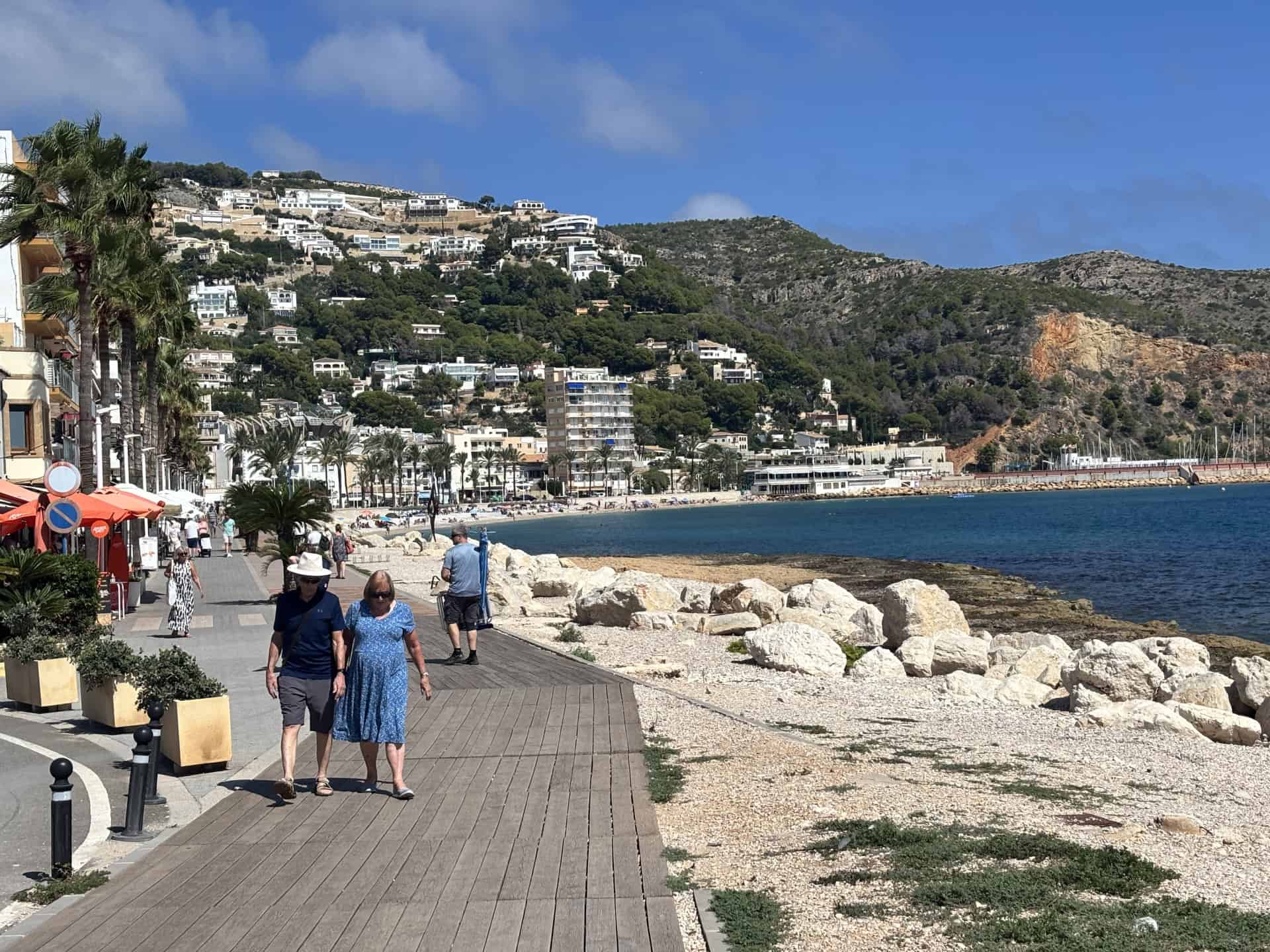
Jávea does not behave like a generic national market. It is a town made up of distinct zones, and the micro decision matters more than the headline.
One of the clearest splits in 2026 is likely to be ‘turnkey versus work needed’.
Buyers continue to pay premiums for homes that are:
- well finished and ready to live in
- correctly oriented for winter light
- practical for year round use
- offering usable outdoor space
Properties that need renovation can still sell, but pricing logic becomes sharper and time on market can lengthen.
The second split is coastal convenience versus inland living quality.
The Arenal, Port and Old Town compete on walkability, services and atmosphere. Inland villa areas such as Montgó, Tosalet, Rafalet or La Lluca compete on space, privacy and long term comfort.
That is why it’s best understood as a collection of markets rather than one single uniform one.
You can browse the main zones and current listings on A Place in Javea here:
https://www.aplaceinjavea.com/javea/
5) What to expect through the rest of 2026
A few grounded expectations for the year ahead:
Pricing holds firm in prime pockets
National growth may slow, but prime coastal locations tend to remain resilient, especially where supply is structurally limited.
Negotiation becomes more normal
Buyers are more price sensitive on anything that is outdated, awkwardly located, or requiring major work.
The best homes still move quickly
Even in a slower feeling market, well priced, well presented homes in the right areas do not tend to linger.
Inland villa belts remain attractive
The shift toward year round living continues to support inland residential zones where buyers prioritise space and lifestyle over pure holiday proximity.
6) Practical takeaways for buyers and sellers
If you are buying in 2026, the most important step is usually deciding on the right part of town first. Two buyers with the same budget can end up in completely different markets depending on whether they choose coastal convenience or inland space.
If you are selling, clarity and realistic pricing matter more than ever. The market still rewards quality, but it punishes uncertainty.
A sensible outlook
Spain’s housing market is forecast to continue growing into 2026, though at a more moderate pace than the hottest recent quarters. (bbvaresearch.com)
Jávea should remain one of the stronger coastal lifestyle markets, shaped by international demand and limited prime stock. (caixabankresearch.com)
But locally, 2026 will be less about national headlines and more about choosing the right micro area, the right type of home, and the right level of finish for how you actually plan to live here.
This article is for informational purposes only. Property price data is drawn from publicly available sources and official data where indicated, and is intended as a general market indicator only. It does not constitute financial or investment advice. Always consult a qualified independent professional before making any property or financial decisions.