
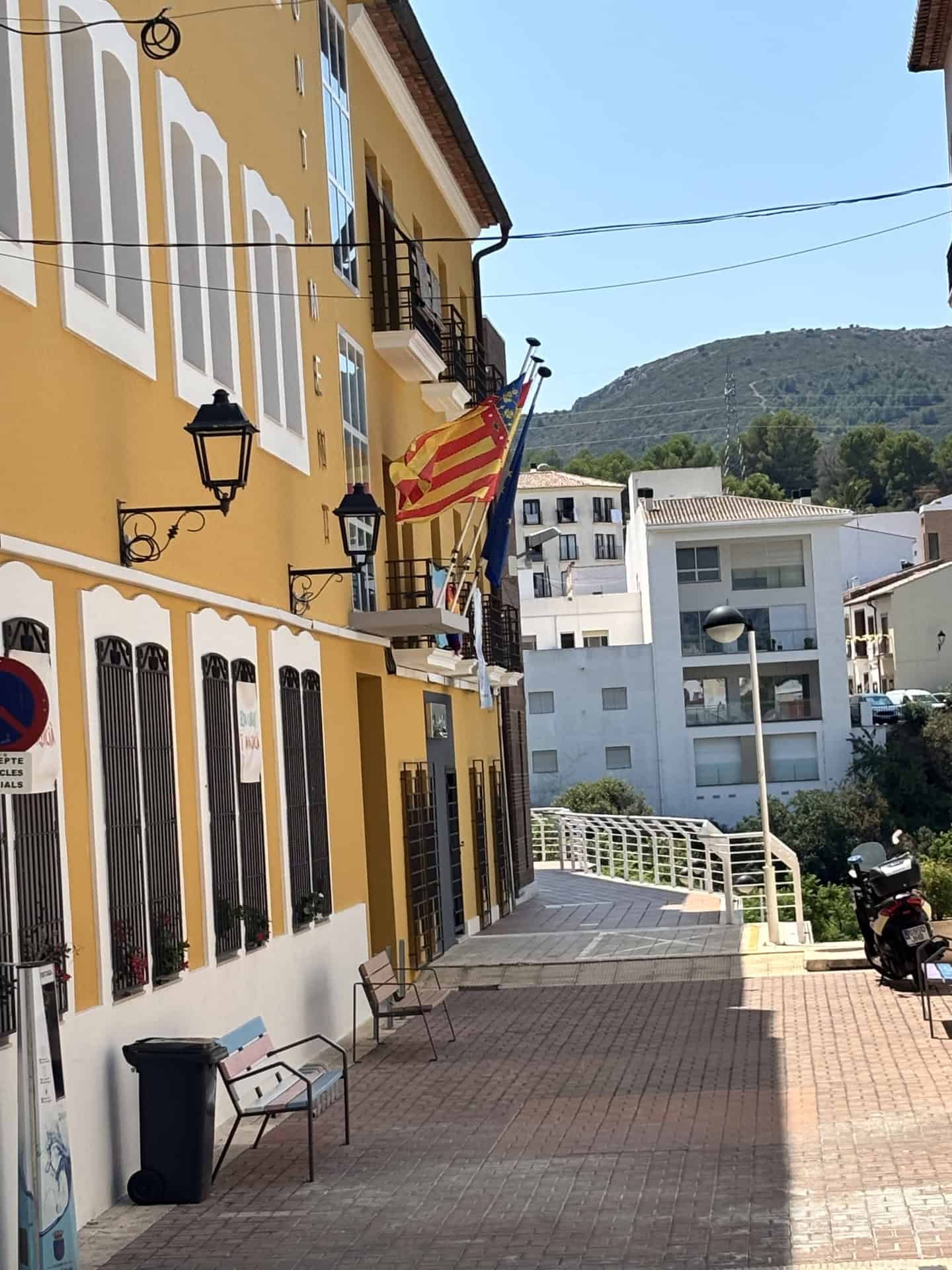
Gata de Gorgos is an inland town in the Marina Alta, positioned between Jávea, Dénia and the Jalón Valley. It sits just off the N-332 and has direct rail and road connections to the coast and the interior. Unlike nearby coastal towns, Gata functions as a working Spanish town first and foremost, with year-round activity, local industry and a permanent population.
It is often driven through rather than visited, but for people who live here, that practicality is the point.
First Impressions
Gata feels busy in a normal, weekday way. Shops open early. Streets are active during school and work hours. Cafés are used by locals rather than visitors. There is very little sense of seasonality compared with coastal towns.
The centre is compact and walkable, with narrow streets, small squares and a clear commercial core. Residential streets spread outward from the centre and rise gently towards the edges of town. You are never far from services, and most errands can be done on foot if you live centrally.
Basketware and Local History
Gata de Gorgos is best known for its long history of basketware and cane craftsmanship. Throughout the nineteenth and twentieth centuries, the town was a centre for working wicker, esparto grass and cane, producing baskets, furniture and household items sold across the region and exported beyond it.
That history has not been reduced to a theme or museum piece. It is still visible in daily life. Many shops along the main street continue to sell handmade baskets, lampshades, furniture and woven goods. Workshops still operate. The craft is part of the town’s identity rather than a tourist attraction.
Street Layout and Housing
Gata developed along the Gorgos river and the historic route linking Dénia to the inland valleys. Streets are functional rather than decorative, laid out for movement, trade and access.
Housing is mixed and integrated into the town. You will find traditional townhouses, apartment buildings and newer homes on the outskirts. There are few gated developments and no large resort-style urbanisations. Most people live among full time neighbours, which reinforces the year-round character.
Day-to-Day Living
Living in Gata is straightforward. Daily needs are close at hand, particularly if you live near the centre.
Supermarkets, bakeries, pharmacies, hardware shops, banks and cafés are all established and used daily. For larger shopping trips, residents typically drive to:
Dénia, around 10 minutes
Jávea, roughly 10 to 15 minutes
Ondara shopping centre, around 15 minutes
The TRAM train line connects Gata with Dénia and Alicante, and is used by commuters, students and older residents. It is a genuine transport option rather than a novelty.
Schools and Practical Services
Gata has local state schools and secondary education options, making it practical for families who want a Spanish schooling environment. International schools in Jávea and Benitachell are within easy driving distance.
Medical services, sports facilities and municipal offices are based in town, reducing the need to travel for routine appointments. This is one of the reasons Gata appeals to long term residents rather than short term buyers.
Noise, Traffic and Atmosphere
Traffic passes through Gata during peak hours, particularly near the N-332 access points. Inside the town, noise levels are typical of a working Spanish municipality rather than a holiday area.
Evenings are generally calm. There is no nightlife scene in the coastal sense, and restaurants tend to close earlier than in resort towns. The town quietens naturally rather than switching off.
Seasonal Differences
Seasonal change is limited. Summer brings heat but not overcrowding. Winter remains active, with shops, schools and services operating normally.
This consistency is one of Gata’s main strengths. There is no winter shutdown and no reliance on holiday traffic.
Who Gata de Gorgos Suits
Gata tends to suit:
• buyers looking for year-round Spanish town life
• people working in Dénia or Jávea who want lower property prices
• families prioritising schools and everyday practicality
• buyers uninterested in beach proximity
• people who prefer a functioning town over an urbanisation
It is less suitable for buyers seeking sea views, gated communities or holiday-only use.
Gata in Context
Gata de Gorgos sits between coast and interior without trying to compete with either. It offers fast access to beaches, services and transport while maintaining its own local economy and identity.
It is not polished, packaged or seasonal. For buyers who value function, stability and everyday usefulness over image, that is exactly the appeal.
