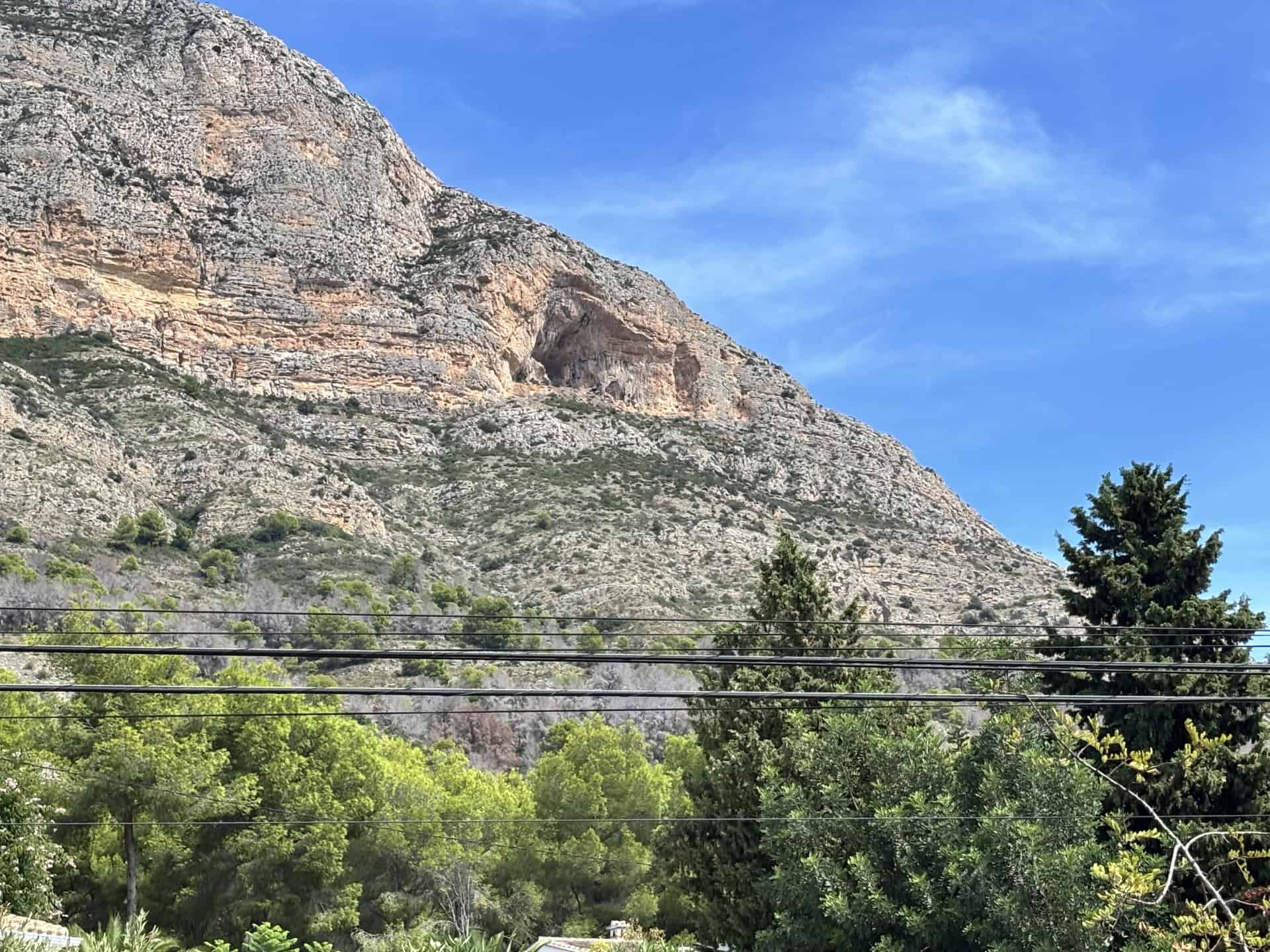
If you spend any time in Javea, you eventually look up at Montgó and wonder what is hidden inside its cliffs. The answer is quite a lot. The caves on the mountain are some of the most important archaeological sites in the region, and they explain why people settled here thousands of years before the town we know today existed.
This sits within the wider Javea Overview guide. For the wider structure of the town and its areas, start with the main property in Javea page.
You do not need to be a serious hiker to visit them, but you do need steady shoes and a calm head for heights. The paths are natural and slightly uneven. When you reach a cave entrance the air changes, the ground cools and the view suddenly feels older than the modern town below.
The Montgó caves show clear signs of early life in Javea. Flint blades, burial traces and fire marks inside Cova del Barranc del Migdia date human presence in this area to roughly thirty thousand years ago. It is one of the earliest settlement indicators on this part of the coast.
The Two Main Caves
Montgó has several cavities and shelters, but two caves matter most for visitors and for anyone trying to understand Javea’s past.
1. Cova del Barranc del Migdia
This is the prehistoric cave. It sits partway up the southern side of Montgó, above the wide valley. Excavations revealed some of the earliest human activity in the area. Flint tools, pottery fragments and burnt stone show people lived and worked here long before farming spread across Iberia.
The cave widens once you step inside. It is not large, but it feels like a natural shelter. The view from the entrance takes in both the sea and the inland fields. You realise immediately why early families chose this spot. They could hunt, gather, watch the coast and find water without moving far.
Specialists believe this cave served two purposes. It was a living space for daily tasks and a burial site for small community groups. That combination is rare in this region and gives the cave its archaeological importance.
2. Cova de l’Aigua
Cova de l’Aigua sits slightly lower on the mountain and was used mainly for water collection. The cave gathers freshwater through natural cracks in the limestone. People enlarged parts of it over time to access deeper pockets. Some of the earliest carved sections still sit just above head height.
The most striking detail is the Roman inscription. A simple Latin message cut into the stone, probably by a traveller or worker who visited during the first centuries AD. Standing there with a torch, you can see the letters clearly. It connects you to a person who walked that same path two thousand years ago.
The cave remained an active water source right into the modern period. Locals walked up with jars during dry months to collect drinking water and use it for animals.
How to Reach the Caves
The trails to the caves start from different points around the Montgó foothills. The most common approach to Cova del Barranc del Migdia begins near the Jesús Pobre side of the mountain. The route climbs steadily through low shrubs before narrowing as it reaches the rocky face.
Reaching Cova de l’Aigua is slightly easier. The trail approaches from the Jávea side with gentler slopes, though it still involves sections of uneven rock.
Both routes require proper footwear. Trainers are fine if the weather is dry. The stone gets slippery after rain, and the heat builds quickly on summer days. Bring water even if you plan a short visit.
What to Expect
Caves always create a little surprise. The temperature drops the moment you step inside and the echo changes how you hear your own movements. In Cova del Barranc del Migdia you notice the ground is uneven from years of use. In Cova de l’Aigua the walls show natural channels that feed the water collection points.
The entrances are modest, but each cave opens out more than you expect. They are not tourist attractions with signs or barriers. You experience them as they are, carved by time, weather and practical use.
A visit to the Montgó caves gives you a clear sense of how people survived here. Reliable water, shelter from wind, a view of both land and sea, and enough space for simple daily living. These early choices shaped where the later town eventually formed.
Safety Notes
• Avoid going after heavy rain.
• Wear shoes with grip.
• Bring a torch for Cova de l’Aigua.
• Stay aware of where the path drops away.
• Mornings are cooler and safer in summer.
Why These Caves Matter
Montgó is not just a landmark. It is the first chapter of Javea. The caves hold physical evidence of the people who settled, traded, sheltered and carried water long before the streets and districts we recognise today appeared.
If you want to understand Javea, start with the caves. They explain everything that followed.
See also: Montgó Mountain Guide