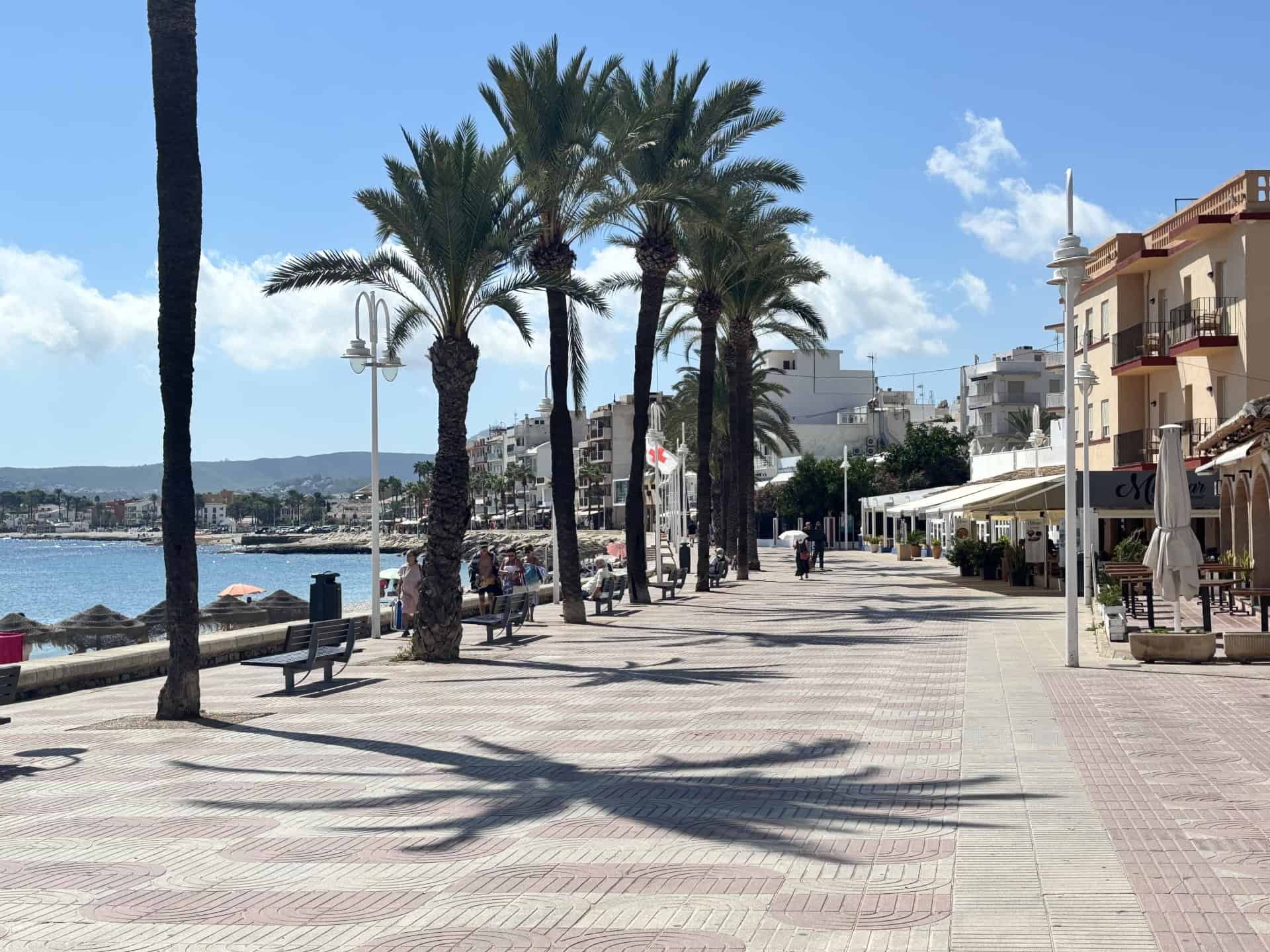
If you spend enough time around the Port you start noticing how steady it is. Not slow, not busy, just steady. The kind of place where people fall into habits without really thinking about them. Morning routines especially. By the time the sun hits the stony beach at La Grava beach, half the neighbourhood has already done their errands.
This sits within the wider Javea Overview guide. For the full neighbourhood layout, start with the main Javea properties page.
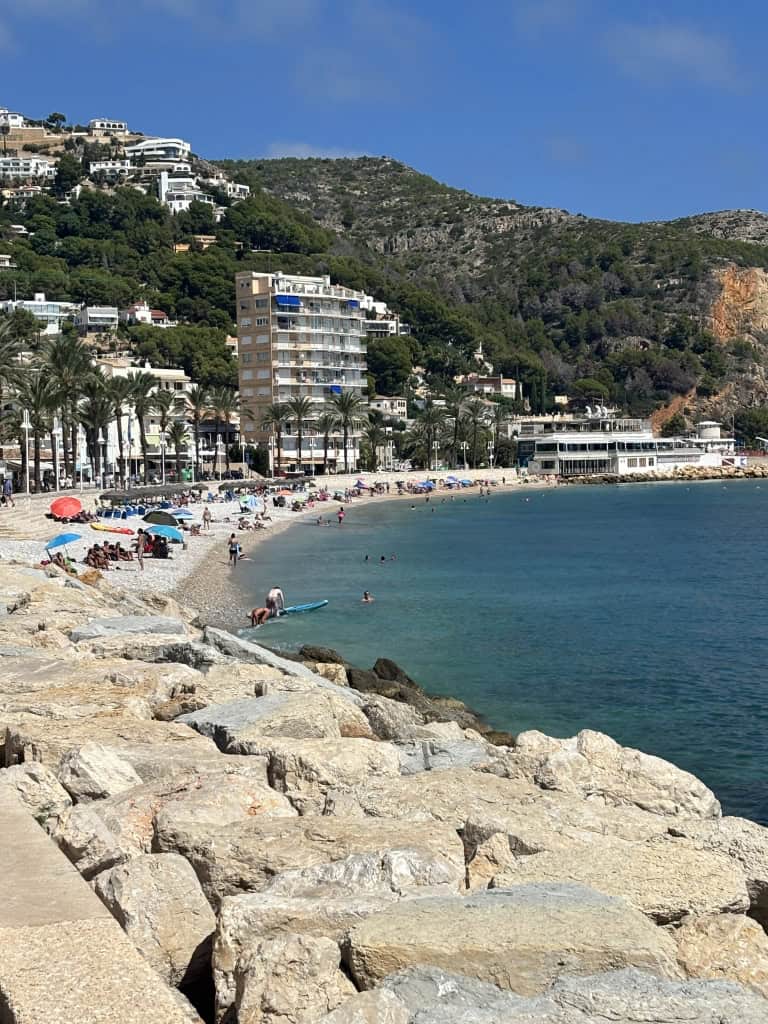
Most days start with the same sounds: metal shutters rolling up on the little shops along Avenida Lepanto, someone sweeping the pavement outside their doorway, boats clinking lightly against their moorings. The air can have a faint mix of sea and diesel when fishing boats are active, but it changes hour by hour depending on the breeze. It’s not constant. It’s just one of the Port’s normal smells, like living near a bakery or a market.
Walk down towards the water and you’ll see the small beach forming its usual pattern: a few hardy swimmers going in early, older residents chatting on the benches, and the same dogs dragging their owners somewhere only they know. The beach here never has the big Arenal crowds. It feels more like an extended front garden for the people who live nearby.
As the morning picks up, the harbour end becomes livelier. Boats being rinsed, nets being sorted, someone shouting greetings across the pontoons. On certain days, the fish market side has its own rhythm. Nothing noisy or dramatic – just the kind of movement that reminds you it’s still a working port, not just a photo opportunity.
Avenida Jaime I, the main street running along the front, is where most residents drift through at some point in the day. There’s bakeries, cafés, bars, small supermarkets, banks, ice-cream kiosks, and the usual cluster of local shops selling practical things: hardware, fabrics, stationery, pharmacy bits. You don’t need the car much if you live here. That’s part of the appeal. You can walk out the door and cover half your jobs within ten minutes or so.
Eating out in the Port is more “regular weeknight” than “big evening out.” There are a few nicer places near the sea, but most spots are small, neighbourly restaurants that don’t need signs shouting for attention like you might see further down the road in the Arenal. You see the same locals at the same tables often enough that you stop being surprised by it. The cafés around the Port roundabout or along the seafront stretch get a loyal morning crowd and by lunchtime most have regulars occupying the same chairs they always use. There’s a real sense of community here.
The streets behind the front are a mix of older apartment buildings and newer ones tucked into little squares and side alleys. Flats tend to be practical rather than showy: decent size, balconies that catch some sun, and communal entrances that have seen real use. Many buildings are lived in year-round, which gives the Port a very different feel to the more seasonal Arenal blocks. In winter, nothing empties out. Life just continues albeit slightly quieter.
Parking depends on exactly where you are. Some streets are straightforward, others narrow enough that you learn to fold your mirrors in without thinking. In summer, when people drift down from other parts of town for dinner or a walk, you might need an extra loop or two to find a space. But for most of the year, it’s manageable. If your building has underground parking, you appreciate it without ever making a big thing of it.
The sea affects the Port more directly than other parts of Jávea. On windy days you feel it immediately. The flags on the Miramar Hotel crack loudly, waves slap harder against the stones, and the whole front smells fresher, almost sharp. Some people love those days. Others prefer the still mornings when everything feels settled and the water looks like glass.
Shops here are practical. Supermercado Mas y Mas, small local fruit shops, bakeries, the butcher on Avenida Lepanto, the chemist on the front. You still go to the big supermarkets out of town for bigger runs, but the Port covers most daily needs without much fuss. There’s also a China shop on one of the lower streets that always seems to have exactly the odd little thing you need when something breaks at home.
Evenings are the Port at its best. People are drawn down to the water without any real plan. Some sit on the rocks near the mouth of the harbour and watch the light go across Cabo San Antonio. Kids climb on the low walls. Couples share a beer on the benches outside El Clavo. Nothing seems organised. It just happens every day because it’s there.
The Port suits people who like routine without boredom. People who appreciate being able to walk to everything but who don’t need loud nightlife. People who enjoy a proper, lived-in neighbourhood where you recognise faces within a couple of weeks. It’s not silent like Montgó and it’s not lively like the Arenal, but it’s the corner of Jávea where the town feels most like itself.
If you want to understand the Port before buying, spend a morning there without rushing. Sit by the church square. Watch the movement of the small shops opening and closing. Walk the front at 7pm when the light cools down but the day hasn’t finished yet. If that slow, steady rhythm makes sense to you, the Port usually ends up being the right choice!
See also: Living in the Old Town