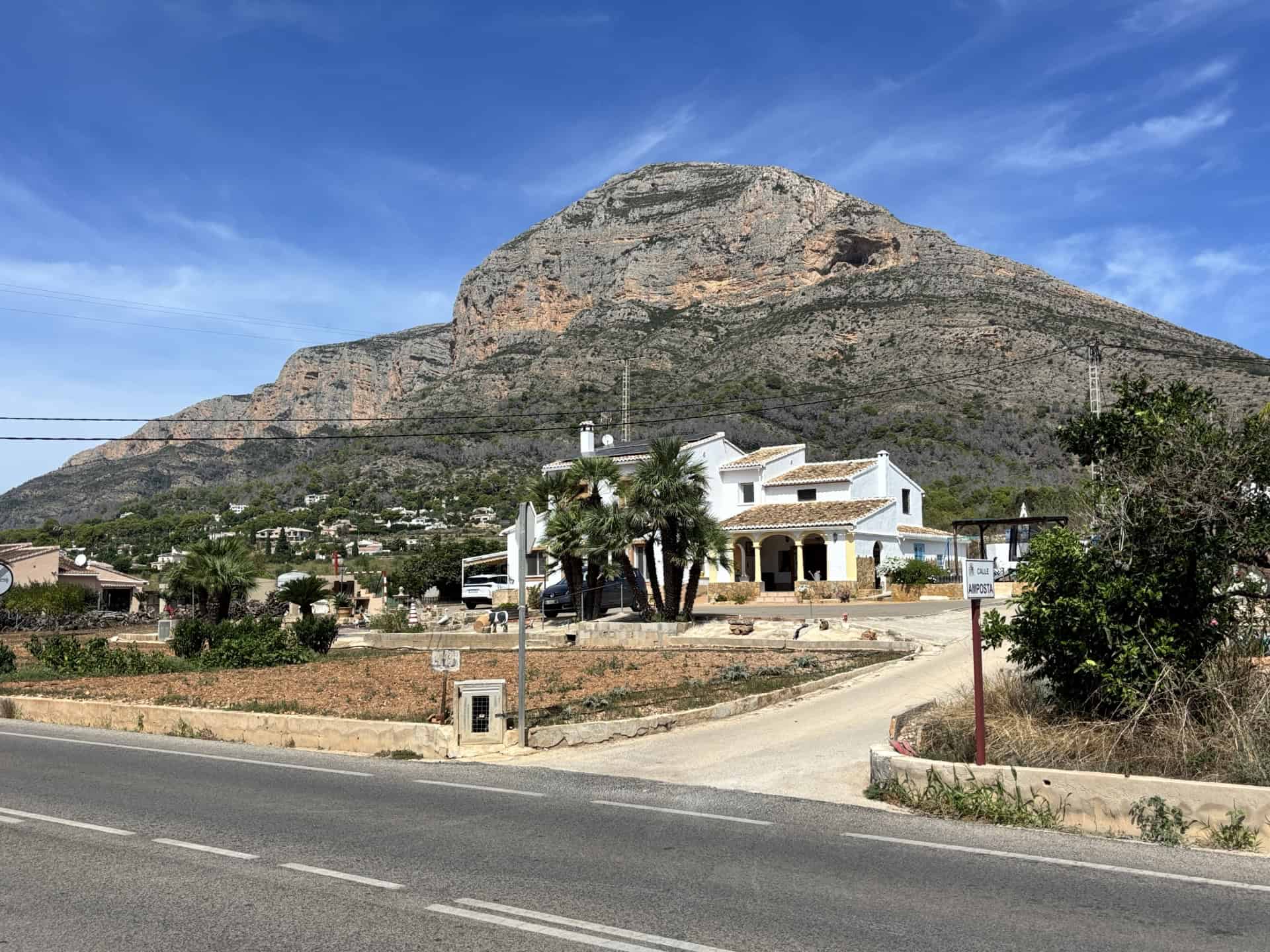
Montgó is a large residential zone that runs along the base and mid-slopes of the Montgó mountain, mainly between the CV-735 Jávea–Denia road, the Jesús Pobre direction and the natural park boundary. It is not one uniform area. Montgó Valls, Montgó Toscamar, the Ermita zone, and the Denia-side slopes all behave slightly differently. Anyone considering buying here needs to understand those differences before deciding.
Orientation and winter sun
The single most important Montgó factor is orientation. Houses that face south or south-east, especially those on the upper Valls side, get strong winter sun from early to late. These homes stay warmer and dry more quickly after rain. Streets like Calle Royal Road, Calle Oxford, Calle Luxembourg and the upper parts of Calle Benitachell generally perform well for winter light.
Properties tucked directly under the mountain, including parts of Ermita and the lower Valls, can lose sunlight earlier in the afternoon between December and February. If you view a house here, check the terrace at 3pm in winter. Many buyers do not.
Montgó Valls vs Ermita vs Denia-side
Montgó Valls is one of the most popular parts. It is closer to Jávea Old Town, the plots are generous, access is easier and the streets tend to be wider. Most residents use the CV-735 daily. The area feels stable, with many year-round homes rather than holiday turnover.
Ermita, around the Ermita del Popúl, is quieter but has more variation in shade because of the mountain’s shape. Plots here can be surprisingly sheltered, which is good in summer but cooler in winter. Road names like Calle Italia, Calle Belgica and Calle Irlanda are common reference points when people discuss this section.
The Denia-side slopes, including the roads branching off the CV-7362, get excellent morning light and more wind. They can feel fresher in August compared to Valls. They are further from Jávea amenities but closer to Jesús Pobre village, the Sunday farmers market and Denia supermarkets. People who work in Denia often choose this side specifically for faster access.
Roads, access and driving conditions
Montgó’s access roads vary. Some are wide and modern. Others are older and narrow with tight bends.
Key points buyers often miss:
- The CV-735 is the main lifeline for most Montgó residents. You use it every day.
- Some streets, like Calle Niza and Calle Amsterdam, have steeper sections that feel different in rain than in sunshine.
- Older villas can have driveways angled sharply downward; check how your car handles the incline, not just the view.
- Street lighting is inconsistent. Some lanes have tall lamps. Others have none. Viewing at night is essential.
- GPS sends delivery drivers to incorrect cul-de-sacs frequently. This is normal on Montgó.
Water, humidity and underbuilds
Montgó has pockets of higher humidity because of its proximity to the natural park. Underbuilds can feel damp, especially in older houses where ventilation was not originally a priority.
Things to check carefully:
- Underbuild walls for salt deposits.
- Storage rooms for stale smells.
- Pool pump rooms for ventilation gaps.
- Moisture levels on shaded north-facing sides.
Most issues are manageable with airflow, dehumidifiers or improved drainage, but you should know what you are buying.
Utilities, water pressure and internet
Water pressure varies slightly with altitude. Mid-level streets tend to have the most consistent pressure. Higher plots closer to the park depend on the exact feed line. It is common for agents to claim the pressure is fine, so test the showers and garden taps yourself.
Internet: Fibre is now available in much of Montgó Valls and the lower streets, but not everywhere. Some cul-de-sacs and higher elevations still rely on radio links. You need the exact address checked, not the street. Starlink is now obviously an option and we have found it works well.
Electricity: Old villas may have outdated fuse panels or limited power. A technical inspection is wise.
Daily life and errands
Montgó is peaceful but requires planning. You drive for almost everything.
Typical travel times:
- Old Town of Jávea: 5 to 10 minutes from most of Montgó Valls.
- Arenal: 12 to 18 minutes depending on elevation.
- Port area: 10 to 14 minutes.
- Jesús Pobre: 8 to 12 minutes via the CV-735 or CV-7362.
- Denia supermarkets: 10 to 20 minutes depending on where you live.
Residents often group errands into one trip to avoid multiple journeys.
Noise and surroundings
Montgó is quiet. Very quiet. You hear dogs, birds, pool pumps, gardening tools and not much else. Nights are extremely still. The silence is one of the reasons people choose the area.
However, note:
- Sound from the CV-735 can carry lightly to some lower homes.
- Wind against shutters is noticeable at higher elevations.
- The natural park side gets more wildlife activity, including occasional boar sightings on the Denia slopes.
Plot maintenance and practicality
Montgó plots tend to be larger than coastal areas. This improves privacy but increases workload.
You should account for:
- Pool maintenance
- Garden pruning, including palms and pine trees
- Terraces that need resealing
- External paintwork affected by sun exposure
- Automatic gates and irrigation systems needing periodic repair
Many residents use gardeners and pool companies weekly or bi-weekly. It’s normal here.
Who Montgó suits
Montgó fits people who:
- want space, privacy and separation from neighbours
- prefer detached homes over apartments
- like quiet evenings
- don’t need to walk to restaurants or shops
- are comfortable driving narrow roads
- want a more Spanish, year-round residential feel than Arenal or the Port
It does not suit people who want:
- a walkable lifestyle
- nightlife or beachfront energy
- minimal house maintenance
- winter sunlight on every façade
- easy parking for visiting family
- zero driving
What you should check before buying
A reliable Montgó checklist:
- How much winter sun does the terrace get.
- What is the driveway angle like during rain.
- Is the pool in sun or shade most of the day.
- How far is the house from the CV-735 during peak times.
- Is there fibre internet at the exact address.
- What is the underbuild humidity level.
- Does the house sit under a rock overhang or in a concave slope.
- Are the deeds and extensions legal and registered.
- How does the area feel at night.
- Are there pine trees on the plot that drop needles into the pool.
Buyers who check these points avoid the common Montgó surprises.