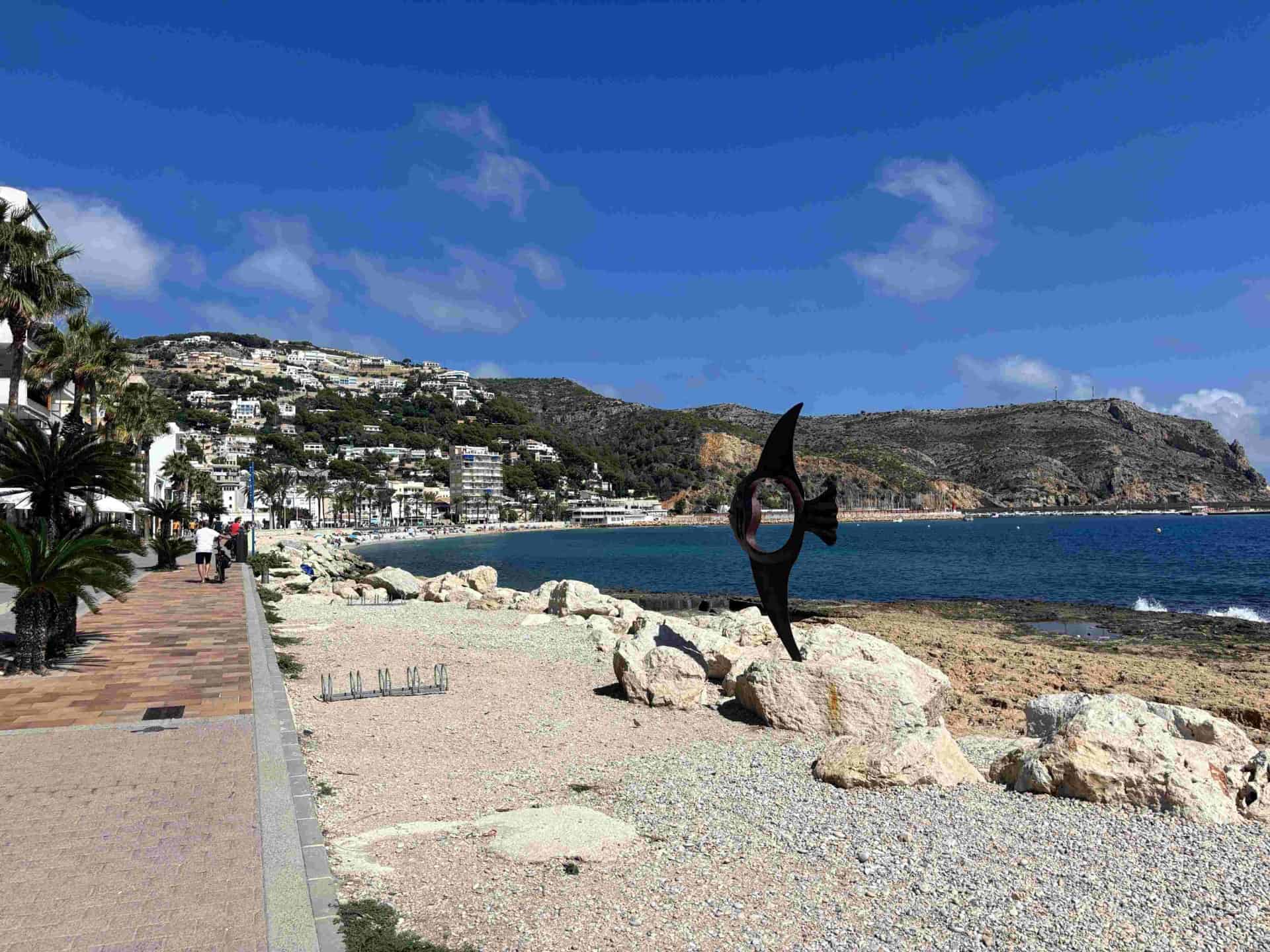
Javea Port looks peaceful from the outside, but noise behaves in unusual ways here. Narrow lanes can amplify a single conversation, some blocks pick up restaurant sound twice a year and never again, and a few buildings stay silent no matter what is happening nearby. The difference between a quiet building and a noisy one is rarely visible from a listing. When looking at apartments in Jávea, this is one of the factors that is hardest to judge from photos alone.
This guide identifies the pockets and specific building types in the Port that offer the best chance of year round quiet living, based on lane angles, airflow, facade position, build era and how sound actually travels through the neighbourhood.
Why Noise Varies So Much in the Port
The Port is small but acoustically complex because of:
• narrow streets
• stone facades
• varying building heights
• the marina wind effect
• echo between parallel lanes
• a handful of seasonal restaurants
A building can be 40 metres from a busier zone but completely silent because of how the street bends.
Noise in the Port follows geometry, not distance.
Where the Quietest Buildings Tend to Be
Across years of local observation, three pockets consistently offer quieter living:
- The inner second-line lanes behind the promenade
- The residential back grid near the supermarket and school
- The sloped streets that rise slightly toward the Old Town fringe
These streets catch less echo, less restaurant noise and fewer passing groups on summer evenings.
1. The Second-Line Lanes: Close to Everything, Quiet When You Choose the Right Angles
These narrow streets sit just behind the promenade but behave very differently from the frontline.
What makes them quiet:
• the promenade sound hits the first buildings and loses force
• angled lanes disperse voices rather than reflecting them
• older buildings have thicker walls that insulate naturally
• few restaurants operate directly in these lanes
Best streets for quiet living:
• Calle Virgen de Loreto (mid to upper section)
• Calle Sevilla
• Calle Pastores
• Calle Cristo del Mar (set back sections)
Buildings here feel close to everything but avoid the echo of the beachfront.
2. The Residential Back Grid: Calm, Warm and Predictable
This area sits behind the main commercial strip and is the most stable for year round residents.
Why it works:
• less foot traffic
• wider street spacing reduces echo
• more residential than tourist focused
• limited seasonal noise
• newer buildings tend to be well insulated
Best streets for quiet homes:
• Calle Santísimo Cristo del Mar (upper stretch)
• Calle Jose Ortega y Gasset
• Calle Rafael Echagüe
• Calle Dr Fleming
Living here means you walk to the promenade in three minutes but return to calm every evening.
3. The Slope Towards the Old Town: A Natural Sound Buffer
As the ground rises slightly towards the Old Town link streets, sound dissipates more easily.
Why these streets stay quiet:
• elevation breaks echo corridors
• fewer restaurants
• thicker construction in older blocks
• more owner-occupied than rented units
Best streets:
• Calle Sor María Gallart
• Calle Virgen de los Ángeles
• Calle Metge González
These streets often get the best balance of warmth, quiet and walkability.
Frontline Buildings: When They Are Quiet and When They Aren’t
Frontline is not automatically noisy, but it depends entirely on:
• floor level
• distance from restaurants
• how open the terrace is
• whether metal shutters rattle in the wind
• marina event schedules
Quiet frontline sections:
• upper floors between the church and the pebble beach
• buildings with recessed terraces rather than exposed frontals
• blocks shielded by adjacent buildings that break wind noise
Noisy frontline sections:
• ground or first floors directly above restaurant terraces
• exposed corners where marina wind whips around
• blocks with hard, flat facades that reflect sound inward
Frontline can be peaceful in winter and lively in August.
Second line is more consistent.
How to Identify a Quiet Building Without Guessing
Even if you do not know the area well, these tests reveal a lot:
• Stand in the street and clap once. If you hear a bounce, it’s an echo corridor.
• Look at the lane angle. If it bends slightly, it will be quieter.
• Check balcony depth. Deep balconies buffer sound; shallow ones reflect it.
• Look for metal terraces. They can rattle in wind if poorly fitted.
• Check if restaurants have outdoor seating near the ground floor.
• Visit at 8am and 9pm. The feel changes completely.
• Ask the neighbours on your floor. Not the agent.
• Identify the nearest parking arteries. Noise often travels from car movement, not people.
This approach is more reliable than standing on the terrace once and hoping for the best.
Specific Building Types That Are Usually Quiet
These patterns hold true across the Port:
Buildings with recessed balconies
They break wind noise and block echo.
Older, thick-walled apartment blocks
Found mainly in second line streets.
Low-rise blocks in the back grid
Better separation, more resident-owned units.
Corner buildings on angled junctions
Sound escapes up the angle instead of bouncing.
Blocks with landscaped courtyards
Vegetation reduces echo in surprising ways.
Buildings to Approach Carefully
Not “bad,” but sensitive to noise depending on the exact location:
• modern frontline blocks with thin glass
• buildings above long restaurant terraces
• lanes with hard stone walls on both sides
• ground floor flats facing bar unloading zones
• buildings directly on the marina slipway route
• top floors exposed to strong wind whistling
A silent January viewing can hide a noisy August reality.
Best Overall Streets for Quiet Living in the Port
Based on street geometry, sound dissipation and daily activity:
• Calle Sevilla
• Calle Sor María Gallart
• Calle Rafael Echagüe
• Calle Jose Ortega y Gasset
• Calle Virgen de Loreto (upper section)
• Calle Metge González
These streets consistently outperform nearby roads for year round quiet.
What Buyers Often Miss About Port Noise
• Noise comes from lane shape, not distance from the sea.
• Two identical flats can behave differently depending on balcony design.
• A single restaurant terrace changes the character of a block.
• Echo on a narrow lane can turn a quiet conversation into a broadcast.
• Wind direction from the marina changes noise levels by day.
• Sound disappears quickly around soft-angled corners.
Understanding this is how you avoid buying the wrong building.
10 Minute Viewing Checklist for Noise in the Port
• Clap once. Listen for bounce.
• Open all windows and wait ten seconds.
• Check terrace depth and material.
• Look upward for overhanging balconies.
• Identify any exhaust fans from nearby kitchens.
• Walk down the lane and back. Note changes.
• Stand in the living room and listen for street murmur.
• Visit at a busier time if possible.
• Check bin collection points.
• Ask which months restaurants are open.
Use this list and you will immediately understand the building’s true sound profile.