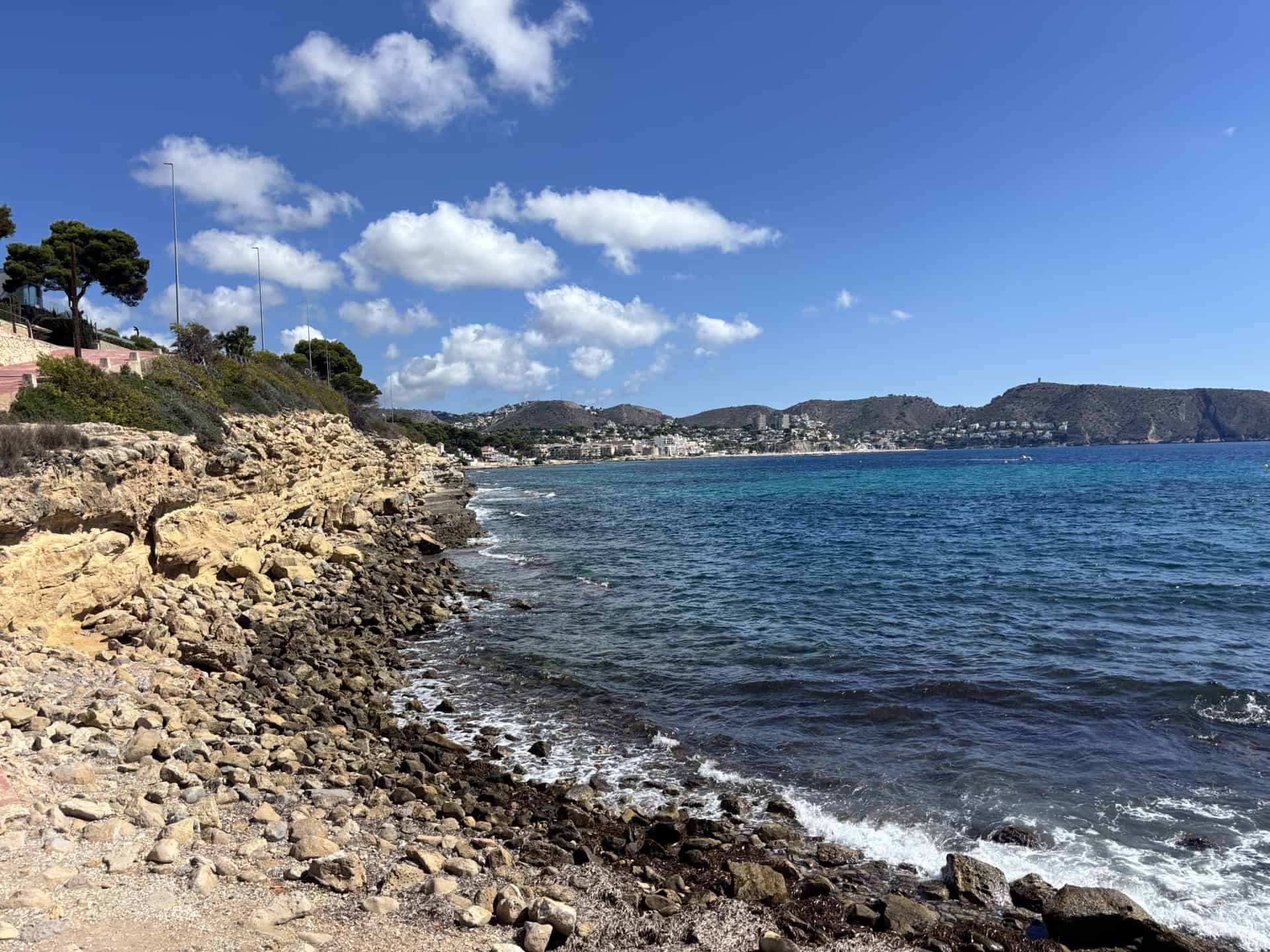
Every buyer dreams of a sea view in Javea. Agents know this.
Listings know this.
Marketing photos definitely know this.
But the phrase “sea view” in Javea covers everything from a full panoramic sweep of the Mediterranean to a five-centimetre sliver of blue between two roofs if you lean off the terrace rail.
This guide explains how to understand Javea sea views properly, which areas offer the most reliable ones, the tricks used in online listings, and how to evaluate a view in person so you don’t overpay for something that looks better in photos than in real life. When comparing property listings in Jávea, understanding how sea views are presented makes a significant difference to how you assess value.
The Three Types of Sea View in Javea
1. True Sea View
Unbroken, clear, horizon-level blue without needing to reposition yourself.
Found reliably in:
• Balcón al Mar
• Portichol headland and Mirador zones
• Upper Cap Martí
• Upper Cala Blanca ridge lines
• Some Tosalet Phase 3 elevations
• Frontline and select second line in the Port
These views hold long-term value.
2. Partial or Framed Sea View
Attractive, but reliant on angle or a gap between structures.
Typical in:
• Arenal second line
• Tosalet lower sections
• Cala Blanca valley-facing pockets
• Mid-slope Cap Martí
• Some Old Town rooftops
• North-facing Montgó lower pockets with distant stripes of water
Good, desirable, but not worth the premium of a true sea view.
3. Technical Sea View
A glimpse of water that technically counts.
Often seen in:
• Arenal back grid
• Port second line with dense build
• Montgó mid slopes where trees intervene
• Villas where the only blue appears from an upstairs terrace corner
Nice to have, but not a lifestyle-defining feature.
Where Sea Views Are Most Reliable in Javea
These areas consistently deliver the strongest sea view value.
Balcón al Mar
This is Javea’s most reliable sea-view zone.
• elevated cliffs
• wide horizon
• strong east and south east exposure
• minimal visual obstruction
Even standard family villas here have powerful views.
Portichol and the Miradors
The Portichol headland and its approach roads offer some of the most dramatic sea views in Javea.
• deep blue, open-water panoramas
• sweeping angles toward Calpe and Cabo de la Nao
• sunrise glows over the water
Downsides: exposure to breeze and limited winter warmth.
Upper Cap Martí
Above the first ridge, many villas gain strong angled views back toward Arenal Bay or out to open water.
Consistency depends on:
• elevation
• orientation
• avoiding land rises directly in front
See Cap Martí guide.
Cala Blanca (Upper Section)
Cala Blanca is often underestimated. The upper streets have legitimate sea views, often framed but sometimes surprisingly wide.
Best pockets:
• the gentle ridges above the cove
• streets running parallel to the coast but slightly elevated
Lower Cala Blanca has far fewer views due to vegetation and buildings.
Tosalet (Phase 3 and Upper Ridges)
Tosalet is not a typical sea-view zone, but Phase 3 and certain upper streets do offer:
• framed views toward Portichol
• partial open-water views over tree lines
• elevated vantage points toward Arenal Bay
The classic Tosalet pine canopy affects reliability.
Montgó High Elevation Plots
Montgó rarely gives classic sea views, but where it does, they can be stunning in a long-distance way.
Found only in high elevation pockets with:
• open valley lines
• no tall neighbours
• clear eastward views toward the water
Not a short-distance sea view, but attractive and atmospheric.
Where Sea Views Are Least Reliable
These zones often produce “technical sea views” rather than lifestyle sea views.
Lower Tosalet
Tree canopy and elevation prevent wide-angle views.
Cala Blanca lower streets
Pretty houses, but the cove’s bowl-like structure blocks most sea visibility.
Arenal second line and inner grid
Many slivers of water, few true vistas.
Port inner second line
Views depend entirely on building gaps.
Montgó North and Mid Slopes
Most “sea views” here are distant and seasonal, often reliant on low humidity.
The Marketing Tricks to Watch For
1. Zoomed Photos
A zoom lens compresses distance, making the sea appear much closer.
2. Elevated Photographer Position
Photos taken from:
• roof terraces
• corners you will never stand in
• steps or garden walls
• bedrooms, not main living areas
3. Selective Cropping
Obstacles (trees, roofs, antennas) are cropped out entirely.
4. Seasonal Visibility
Winter clarity makes marginal views look sharper than they appear in humid August evenings.
5. Obstacle Avoidance
Tall vegetation or unbuilt plots are excluded from the frame.
How to Judge a Sea View Properly During a Viewing
Use these rules.
1. Sit down
If you must stand or lean to see the sea, the view is minor.
2. Check from real-life positions
Look from the sofa, the dining table, and the main terrace chairs.
3. Move a metre left and right
If the sea disappears, it is a framed or technical view.
4. Check all seasons if possible
Humidity softens view clarity dramatically.
5. Identify blockers
Look for:
• palm growth
• pine canopy
• new-build plots
• future extensions next door
6. Understand horizon angle
Flat horizon views hold their value.
Narrow angled glimpses look better in photos than in person.
When a Sea View Is Worth Paying For
A genuine premium applies if:
• the horizon is visible from seated positions
• you have a consistent line of open water
• the view is present from multiple rooms
• obstructions are unlikely to change
Where buyers make mistakes:
See Where Buyers Overpay in Javea.
Areas With Surprising Sea View Value
These pockets offer better views than people expect:
Upper Rafalet
Long-distance horizon slices, very atmospheric at dusk.
Upper Adsubia
Framed views toward Arenal Bay and Montañar.
Cala Blanca Upper
Often overlooked, but excellent partial and framed views.
Portichol Approach Roads
Some of the best value-per-view in Javea.
The Five-Minute Sea View Test
On any viewing:
• Sit in the main terrace chair
• Look straight ahead without moving your neck
• Turn your head slightly left and right
• Check the view from the sofa
• Note anything that could grow or be built
• Ignore zoomed photos
• Ask to revisit at a different time of day
If the view is still impressive after this test, it is a good one.