
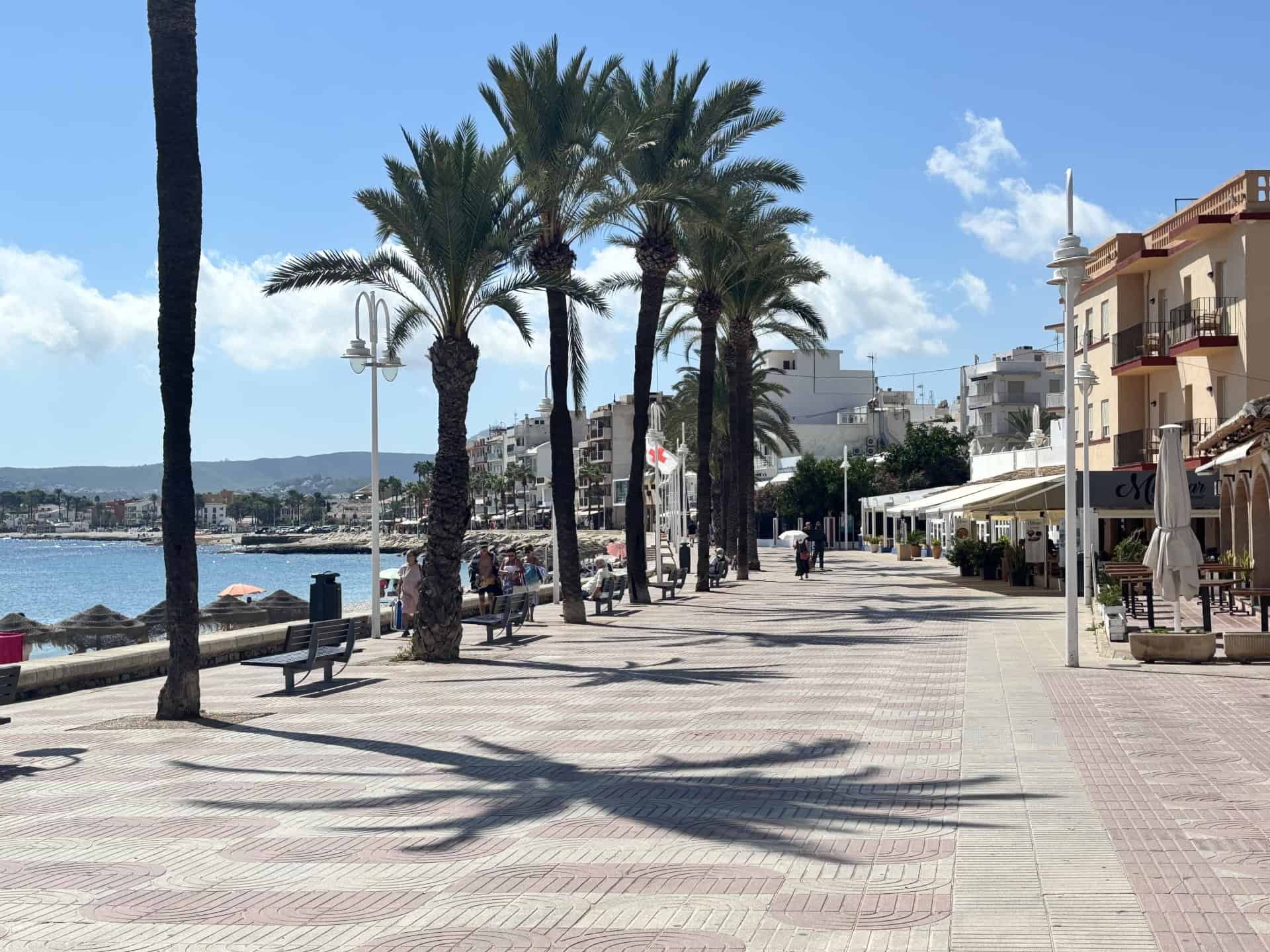
Javea Port, officially known as Duanes del Mar, is one of the town’s three main coastal zones. It sits between the Old Town and the Montañar coastline and combines a working fishing harbour with residential streets, schools and year-round services.
Unlike more seasonal parts of Javea, the Port functions as a lived-in neighbourhood throughout the year. That year-round rhythm strongly influences how it feels to live here and plays a role in both demand and pricing for property.
This guide focuses on what daily life in the Port is actually like, and who it tends to suit best.
First impressions
The Port feels active but grounded. Fishing boats, cafés, school traffic and local errands shape daily life more than tourism. There is movement during the day, particularly around the harbour and Avenida Jaime I, but evenings outside peak summer are generally calm on residential streets.
It does not feel like a resort zone. The working harbour, local businesses and schools give the area a practical, town-like character that remains visible throughout the year.
Layout and character
The Port is compact and walkable. Streets such as Avenida Jaime I, Calle Doctor Fleming and Calle Manuel Bordes Valls form the core residential and commercial spine of the area, with smaller streets running back toward the Old Town.
Property is predominantly apartments, with a mix of older buildings and more modern blocks. Detached villas are rare. Homes closer to the harbour and marina tend to command higher prices due to limited supply and consistent demand.
Second-line streets often feel quieter than buyers expect, despite being close to cafés, shops and the seafront.
Day-to-day living
Living in the Port is largely car-free. Most residents walk for daily needs, errands and social life. Typical distances include:
- La Grava beach within a few minutes on foot
- Fish market and harbour at the centre of the area
- Old Town at around ten minutes on foot
- Montañar coastal walk with immediate access
Supermarkets include Mas y Mas in the Port itself, with Mercadona in the Old Town a short walk or short drive away.
The convenience of being able to manage everyday life on foot is one of the Port’s biggest draws for full-time residents.
Parking and practical reality
Parking in the Port is manageable but not uniform. Convenience varies by street and proximity to the harbour. Many residents park a short walk from home as part of normal daily life.
For buyers used to guaranteed on-street parking directly outside a property, this can require an adjustment. For those prioritising walkability and central location, it is usually an accepted trade-off. Understanding this early helps set realistic expectations.
Schools and access
The Port works well for families using state education within walking distance.
CEIP Port de Xàbia, a primary school, is located in the area. Secondary schools are based slightly inland. International schools such as XIC and Lady Elizabeth School are reachable by car in around 15 to 20 minutes.
Road access connects directly to the Old Town, Montañar and inland routes without needing to pass through the Arenal, which helps avoid unnecessary congestion.
Noise, traffic and atmosphere
The Port has more background activity than inland residential areas but less late-night noise than the Arenal. Restaurants and cafés create evening movement along the seafront, but this fades quickly on residential streets behind the main frontage.
Traffic increases during school drop-off and pick-up times and on summer weekends, though congestion is limited by the area’s compact layout and multiple access routes.
Seasonal feel
Seasonality is lower here than in other coastal zones. Summer is busier for sure, particularly around the harbour and promenade, but the Port does not shut down in winter. Cafés, shops and services operate all year-round, which attracts long-term residents rather than holiday-only owners.
Many buyers are surprised by how quickly the Port returns to a normal rhythm outside peak season compared with other beach-focused areas.
Property types and living style
Most buyers focus on apartments, not only for price reasons but because Port living is about proximity and convenience. Orientation, light and noise levels can vary significantly between buildings, so these details matter when viewing.
Townhouses behind the main streets can offer a balance between Port location and privacy, though they are relatively rare. Buyers wanting more space or outdoor areas often look a few minutes inland while continuing to use the Port as their main daily hub.
Who the Port suits
The Port typically suits buyers wanting year-round life rather than holiday-only use, those prioritising walkability and daily amenities, apartment buyers rather than villa buyers, families using local state schools, and buyers seeking steady long-term rental demand.
It appeals to people who want Javea to feel like a real town throughout the year rather than a seasonal destination.
Who the Port does not suit
The Port is less suited to buyers looking for detached villas, large plots or guaranteed parking directly outside the property. Space is traded for location and convenience.
Buyers seeking total quiet at all hours or a lifestyle centred around driving rather than walking may find inland residential areas more comfortable day to day.
Javea Port in context
Javea Port functions as a practical residential hub with a working harbour at its centre. It does not compete with the Arenal for beach atmosphere or with the Old Town for tradition.
Instead, it appeals to buyers who want coastal access, daily convenience and a sense of local life throughout the year.
