
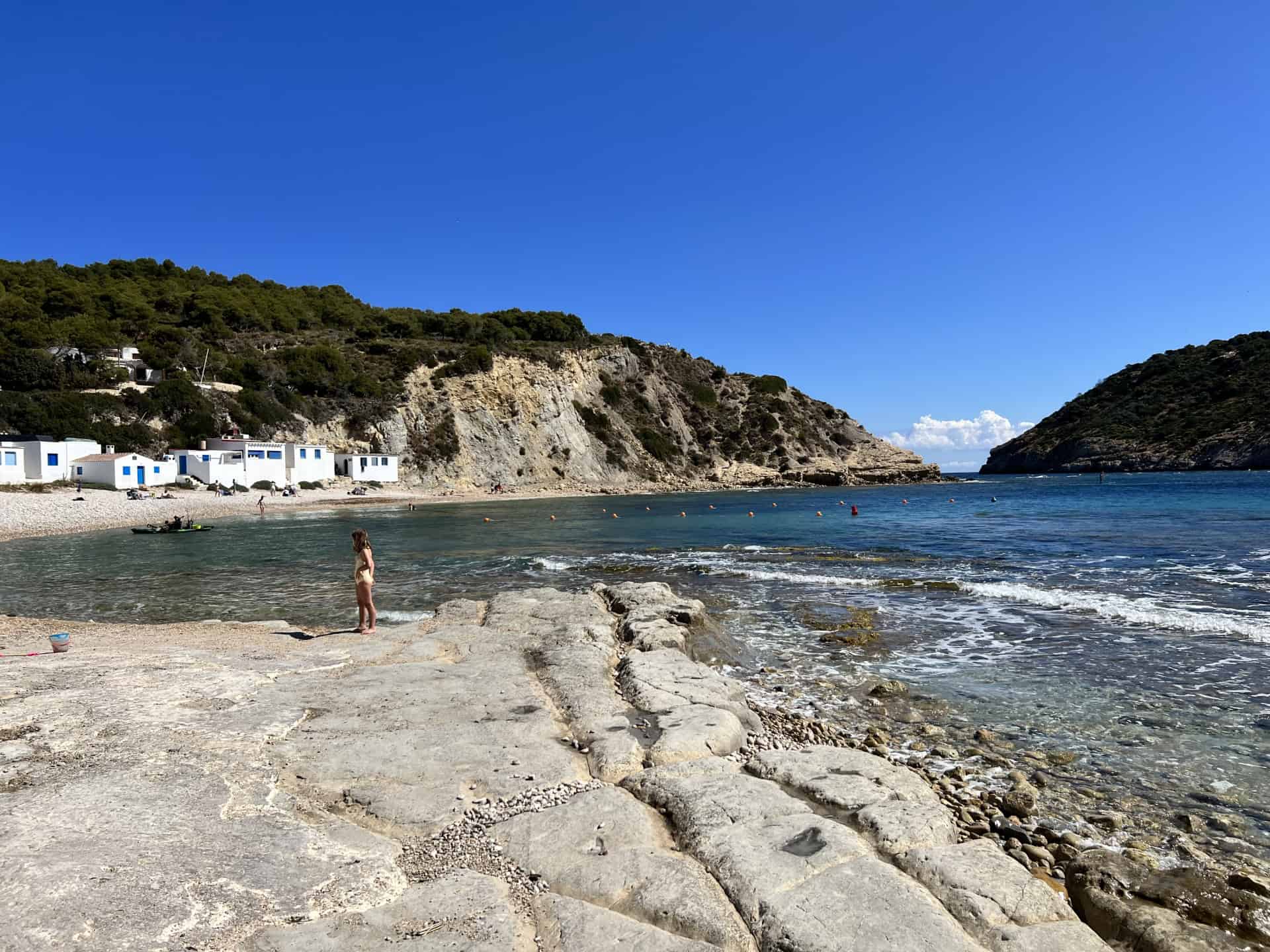
Portichol is a coastal residential area on the eastern side of Jávea, centred around Cala Portitxol, also known as La Barraca. It sits above and around the cove itself, with Balcón al Mar to the north and the edge of the Granadella Natural Park to the south. The Arenal is the most direct point for services, while the Port and the Old Town are reached by car.
Portichol is not a resort area. It is a low-density residential zone defined by rocky coastline, sea views and foot access to coves rather than promenades or beaches.
First Impressions
Portichol feels quiet and established. Roads are residential, traffic is light, and most movement is local. The terrain slopes gently toward the coast, with properties positioned to take advantage of open sea views and morning light.
There is no commercial centre here. Life revolves around the cove, coastal paths and nearby residential streets rather than shops or nightlife.
Cala Portitxol (La Barraca)
Cala Portitxol is the focal point of the area. The cove is rocky rather than sandy, with clear water and traditional fishermen’s huts along the shoreline. Access is on foot from the parking area above, and the return walk is steep.
Cala Clemence sits directly on the cove and is the only bar and restaurant at sea level. It operates year-round and is used by residents as much as visitors, particularly outside peak summer months.
The cove becomes busy in summer, especially in the mornings. Outside high season it is calmer and often used by locals for swimming and paddleboarding.
Street Layout and Housing
Portichol is made up primarily of large detached villas and smaller residential clusters. There are no large apartment complexes and very few new developments. Streets are practical rather than decorative, following the contours of the coastline.
Homes tend to prioritise privacy, terraces and sea-facing orientation. Many properties sit above the cove rather than directly on it, which keeps most residential streets quiet even when the beach is busy.
Everyday Practicalities
Portichol is very much a car-dependent area.
Most residents use the Arenal for daily errands, including supermarkets, banks and medical services. Larger shopping trips are typically done in Jávea town or Ondara.
There are no schools, gyms or large shops within Portichol itself. This contributes to the calm atmosphere but means regular driving is part of daily life.
Walks and Coastal Access
One of Portichol’s strengths is access to coastal walking routes. Paths link the area toward Granadella and north toward Balcón al Mar, with uninterrupted sea views and minimal road crossings.
These routes are used year-round by residents for walking and running, particularly outside summer.
Noise, Traffic and Seasonality
Noise levels are low for most of the year. There is no nightlife and no through traffic. Summer brings more movement around the cove during the day, but residential streets remain largely unaffected.
Winter is quiet and stable, with no seasonal shutdown. Cala Clemence remains open and the area continues to function normally.
Who Portichol Suits
Portichol typically suits:
• buyers prioritising sea access over walkable amenities
• residents who value privacy and low density
• people comfortable with driving for daily needs
• buyers seeking rocky coastline rather than sandy beaches
• those wanting a residential feel rather than a resort atmosphere
It is less suitable for buyers who want shops, schools or beaches within walking distance.
Portichol in Context
Portichol sits between the Old Town side of Jávea and the Granadella natural area. It offers a quieter alternative to the Arenal and Port, with a stronger emphasis on residential use and coastal access.
Its appeal lies in consistency rather than convenience. For buyers who want the sea nearby without the activity of central Jávea, Portichol remains one of the more discreet coastal options.
